Showing posts with label space. Show all posts
Wednesday, March 26, 2014
Space in the Seventies.
As I've mentioned a few times, according to my childhood ambitions, I should be working on the Moon by now. Or commuting from my otherworldly Arvo Job to my groovy pad in the swankiest district of the hippest, domed metropolis on the Martian plains. At the very least, I should be living on a cool, colony habitat orbiting Jupiter or some distant star.
If you want to relive that dream, pop over to http://publicdomainreview.org/collections/space-colony-art-from-the-1970s/ and see what the future used to look like.
Forests.
But in space!
In the 1970′s the Princeton physicist Gerard O’Neill with the help of NASA Ames Research Center and Stanford University held a series of space colony summer studies which explored the possibilities of humans living in giant orbiting spaceships. Colonies housing about 10,000 people were designed and a number of artistic renderings of the concepts were made.
Wednesday, February 19, 2014
Space on a Shoestring
I'm excited about how the race to Mars seems to be hotting up. We might just get off this rock yet. And I like this NY Times article with NASA / Hollywood budget comparisons and much philosophising about what maketh a viable space program. Money? Ingenuity? Poorly paid technicians?:
Just days after the launch of India’s Mangalyaan satellite, NASA sent off its own Mars mission, five years in the making, named Maven. Its cost: $671 million. The budget of India’s Mars mission, by contrast, was just three-quarters of the $100 million that Hollywood spent on last year’s space-based hit, “Gravity.”
“The mission is
a triumph of low-cost Indian engineering,” said Roddam Narasimha, an aerospace
scientist and a professor at Bangalore’s Jawaharlal Nehru Center for Advanced
Scientific Research.
Ever since MIR, I've been a fan of not-so-shiny Soviet technology - I just have this notion that if they ever do get into space and start working there, the Russians will have the type of vehicles you can crash into an asteroid, stick back together with gaffer tape, siphon some vodka into the depleted warp drive, kick into gear, and keep heading for the stars (and watching Solaris decades ago only strengthened this belief.) India seems to agree:
It is a question
of philosophy, and each country has its own,” explained Mr. Radhakrishnan. “The
Russians, for example, believe in putting large amounts of time and resources
into testing so that the systems are robust.”
And for those who always argue that there are far more pressing problems than space exploration that need money thrown at them, there's this neatly Indian perspective:
Scientists
have also said that space exploration and the alleviation of poverty need not
be mutually exclusive. “If the Mars mission’s $75 million was distributed
equally to every Indian, they would be able to buy a cup of roadside chai once
every three years,” said Mr. Narasimha, the aerospace scientist, referring to
the tea that many Indians drink.
“My guess is
that even the poorest Indians will happily forgo their chai to be able to see
their country send a rocket all the way to Mars.”Of course, said poor people, if given half a chance, might just voice their disagreement. Sometimes, a cup of chai is just what you need to get you through the day.
Saturday, February 8, 2014
We've Been Snapped by Curiosity
Smile! The latest and largest of NASA's plucky Mars rovers is busy taking photos of us.
The two bodies in this portion of an evening-sky view by NASA's Mars rover Curiosity are Earth and Earth's moon. The rover's Mast Camera (Mastcam) imaged them in the twilight sky of Curiosity's 529th Martian day, or sol (Jan. 31, 2014).
For those who need some orientation, here's a helpful guide marking the position of the Earth and the Moon (seems a bit unclear in these photos - it might be best to just follow the link):
Thursday, November 7, 2013
Room to Move
In the future, real estate agents need not fear unemployment, not ever. In fact, they will become an independent species of human, probably the dominant strain, running rampant through the galaxy and handing out their shiny brochures. They'll be impossible to eradicate, and all economic power will be controlled by their mighty interstellar guild because:
Astronomers report that there could be as many as 40 billion habitable Earth-sized planets in the galaxy.
http://www.nytimes.com/2013/11/05/science/cosmic-census-finds-billions-of-planets-that-could-be-like-earth.html?_r=1&
So pick a quadrant, any quadrant, and invest now. Best to get in early and buy before the prices skyrocket. So what if the planet is on the seedy side and needs a little renovating? Be a winner and grab yourself a continent or two. Or nab the whole darn thing! Location, location, location. You'll be sorry if you don't.
Sunday, October 6, 2013
Bards and Sages Quarterly, October 2013
My plucky little NASA Martian rover and assorted other personable space probes tribute short story The Stars Their Hesitation in the Bards and Sages Quarterly, October 2013 issue is now available in a multitude of formats to suit all reading predilections, budgets and technological tastes (I was waiting for all the info to come together before posting):

Amazon Paperback
Amazon Kindle
Smashwords (EPub, .mobi, PDF, LMR and PDB)
Please enjoy!
Labels:
Bards and Sages,
NASA,
Published,
Rover,
Self Promotion,
short stories,
space
Saturday, October 5, 2013
I Wanna Go To Space, And I Wanna Go Now!
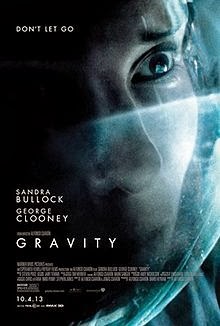
I saw Gravity today. Best. Space. Movie. In. Ages. Maybe. Ever.With not a single alien or phaser in sight, this was the most exciting space adventure I've watched in a long, long time, and it had, more or less, given the needs of storytelling, the added thrill of making the audience feel they were watching a drama that could happen in real life. It was so big, and at the same time so intimate, simultaneously vast and claustrophobic. I also liked the international feel of the movie, with the Earth rotating below, and all the nations of that planet represented with their stations and astronauts working together, each bravely trying to establish themselves on the new frontier. It made me feel warm and fuzzy and optimistic about humanity.
The visuals were heart-achingly stunning. The wannabe astronaut in me was overwhelmed by the beauty of this movie, and the courage and intelligence of the people who get the job done in the harshest of environments. I have to confess, I shed a few tears of yearning simply because this movie so effectively conveys that space is awe-inspiring and so full of potential, and I so want to go there just once in my lifetime, and I very strongly feel that WE AS A SPECIES HAVE TO GO THERE!
I especially noticed three lads in the audience today who gave me great hope. Early teens, popcorn munching, the kind of youths my aged type can often reflexively dismiss as shallow, I was initially rather dubious in a unforgivably superior way that they would enjoy the movie (no aliens!), but every time I glanced their way, the meticulously gelled, identically Bieber-haired trio were silent and spellbound. They too, it seemed, were members of my tribe of wannabe astronauts. Maybe they'll make it. Maybe Gravity will inspire them to go for it. They're young enough. I hope so. After all, who says astronauts can't be fashionably coiffed?
Thursday, September 26, 2013
Take Me Out To The Red
Over at The Mary Sue, they're reporting a shades-of-Firefly SF series in development which is evocatively titled Red. It's described as:
a neo-Western drama about the first human settlement on Mars and life on this new frontier, centering on the relationships between the town’s female sheriff, a doctor and a criminal.
Mars. Colonisation. Space cowboys and cowgirls. Maybe a shootout at the Mt Olympus O.K. Corral. Count me in, at least for the first few episodes, then we'll see if it's got that vibe we crave. And if it stirs up interest in heading outwards for those high frontiers, if it makes space exploration look sexy and colonisation exciting, that can only be a good thing for humankind in general, even if it is a tad misleading. Go ask any pioneer who trudged across a desert.I hope the Mars rovers put in a guest appearance :)
I miss the Firefly episodes that never were :(
Wednesday, August 7, 2013
Outer Space Just Got Pinker
As an addendum to yesterday's post, I've just discovered that to commemorate the first anniversary of Curiosity's landing on Mars, NASA has teamed up with Mattel to create the Mars Explorer Barbie.
I do like the fact that after luring the little girls in with much pinkness and rover cuteness:
The packaging art also includes a list of facts about the history of American women space explorers, plus a link to the space agency's Women@NASA website.
I'm not a great fan of pink myself (though I understand that historically, it was once viewed as a powerful, vibrant colour before being demoted to a weak, "female" shade, but now seems to be swinging back and climbing the ranks as it is defiantly embraced and empowered again. Humans are funny creatures, imbuing the merest things with meaning according to societal trends and then using those templates to take shortcuts when thinking.) Anyway, anything that says space exploration is not just for boys, that girls can do these things too and do them their own way with feminine sass and flair if they choose (and not, if they also choose) can only be a good thing.
I hope this means we'll soon see little girls unselfconsciously playing space launches and landings in their bedrooms and racing their spacesuited dolls at breakneck speeds around the lounge room coffee table in pink exploration buggies. I hope to see them organising tea parties in back yards for Barbie, Spirit, Opportunity and Curiosity, and the five of them, whilst eating pretend scones, discussing with aplomb the difficulties of setting up a Martian colony.
And if, as they grow older, these girls look up at a starry sky and see that the universe, which doesn't give a hoot about human politics, is actually a cool, gender-neutral place full of wondrous challenges, then I'd say Barbie's job is done.
Tuesday, August 6, 2013
Party Time!
Over at the JPL/NASA site, everyone is wearing funny hats, streamers deck the consoles, whistles are being blown and everyone is reminiscing about that amazing event which happened just one year ago when Curiosity, that huge hunk of wonderfully sturdy technology, successfully landed on Mars. What an achievement! And one that the earthbound teams involved are still justifiably and most palpably proud of. There are plenty of stunning photos, videos, and fun information like the list of Curiosity's mostly chirpy wake up songs that the MSL team have played at the start of each Martian day. You know, stuff like Don't Worry, Be Happy - just the thing to cheer up an explorer far from home and all alone on an alien world.
You can even get into the spirit of things by sending a postcard to Curiosity.
Aaah, how I love those plucky Martian rovers.
Wednesday, July 24, 2013
It's All About Us, Maybe.
I often pop over to this NASA site. Like many others, viewing the breathtaking images from NASA's telescopes and probes often reminds me of Douglas Adams' famous Total Perspective Vortex. You know, the machine that lets an individual experience how utterly insignificant they really are in the greater scheme of things and this truth basically melts their brain (unless, of course, they have an ego big enough to confidently compete with an infinite universe). A true sense of perspective, therefore, is not a entirely desirable thing for your average citizen. It can lead to much brow slapping, moans of What's it all about, and existential crises of the truly epic sort.
Still, skirting around the edges of that true sense of perspective can induce gasps of amazement and feelings of heart-swelling wonderment, and for me, today, that WOW! came from this image, taken on July 19, 2013 by the Cassini spacecraft, which shows the rings of Saturn, our very own, little blue planet Earth, and our moon as well :
I prefer the uncluttered image above, but for those who need a helping hand, NASA also kindly provided a touristy YOU ARE HERE version:
If only one could shrink oneself down and hitch a ride on one of those crafts gallivanting around the outer solar system, or better still, a daring little probe leaving for realms unknown beyond our home patch.
It'd be a cold and harsh trip, for sure, but oh, the things one would see!
Monday, April 8, 2013
Getting Into The Spirit Of Things
This is turning out to be quite a week. I've just sold another SF story, namely The Stars Their Hesitation, which stars Spirit, as in the plucky, little Martian rover that could, and other assorted space probes, to Bards and Sages Quarterly.
I've always felt a bit sad about the probes hurtling through space all alone, and the rovers switched off and left on their lonesome on the windswept plains of the Red Planet after doing such a sterling job for us, and, well, this story is partly my way of thanking them all for their efforts and making things right, and partly about other things...
It'll be out in October.
Labels:
Acceptances,
Bards and Sages,
Mars,
Rover,
SF,
short stories,
space
Sunday, March 31, 2013
Starry, Starry Right
Apropos four posts ago, my stars this weekend read:
Much of March may have seemed like Groundhog Day, with reps of recurring behaviour, replays of all too familiar scenarios, déjà -vu communications, blasts from the past...
Spooky. It's almost enough to make me a believer.
On a more annoying front, there's a UK spec-fic anthology with Western star signs as the theme for which I suddenly had a great story idea two days ago. I'd given up on it and moved on, but obviously the old subconscious was still playing around with concepts. The problem? The deadline is today, and since I've been running around all over the place this Easter (must do out-and-about stuff while I still can) and have barely written a sentence, it ain't gonna happen. The stars, it would seem, in this particular case were not aligned in my favour.
Saturday, February 16, 2013
Great Balls of Guilt
So today's frightening news was all about a meteorite hitting the Russian Urals:
At least 112
people have been seriously hurt among the 1100 injured, according to the
Interior Ministry. About 200 children who had been at schools were among the
hurt from flying glass and debris.
The
meteorite, which weighed about 10 metric tons and may have been made of iron,
entered Earth's atmosphere and broke apart 30-50 km (19-31 miles) above ground,
according to Russia's Academy of Sciences.
The energy released when it entered the Earth's atmosphere was equivalent to a few kilotonnes, the academy said, the power of a small atomic weapon exploding.
Luckily, updates such as this soon soothed my troubled conscience:
NASA
said that the Chelyabinsk fireball had nothing to do with the approaching 2012
DA14 asteroid, as some scientists had previously suggested.
"The
trajectory of the Russian meteorite was significantly different than the
trajectory of the asteroid 2012 DA14, making it a completely unrelated object,”
the space agency said on its website.
Events like this are a timely reminder that there's a lot going on out in the great unknown beyond the comfort of our cosy Spaceship Earth as it negotiates the universe's highly unregulated interstellar traffic.
Friday, February 15, 2013
Duck!
So here it comes, Asteroid 2012 DA14 (they couldn't have come up with a snazzier name?) which will flyby just 25,000 kilometres above out heads, the closest-ever known approach by a large near-Earth asteroid. 45 meters across and whizzing past inside the ring of GPS, weather and communications paraphernalia presently in geosynchronous orbit, it'll be 8000 kilometers closer to us than any of those satellites. Not to worry though as researchers say that both the satellites and our planet are safe from impact. Wouldn't want our smartphones out of action. Now that would be a catastrophe!Lucky Australia will be afforded one of the better views of this non-happening Armageddon. Look under the Southern Cross from 4.30am AEDT. And here you can read about everything you need to know about Asteroid 2012 DA14 (Happy Harbinger?)
The interesting thing about this record event, apart from the cosmic bullet burn suffered by Earth, has been reading about all the asteroid deflection research going on around the world. Bandied about with abandon are plans to use kinetic impactors or gravity tractors, fitting asteroids with rockets, vapourising space rocks to force them to move in a different direction, and painting asteroids white so the pressure of sunlight will force the asteroid into a safer orbit etc. I was amused to read a slightly dismissive quote by a scientist in New Scientist stating that "These are in the realms of science fiction for now" (oh, the insult) but then a few paragraphs later, there was talk of the viability of designing a nuclear missile to blow apart a dangerous asteroid or comet, and a real, upcoming test mission called Deep Impact 2 to smash a spacecraft sans nuclear explosive into a small asteroid. So did that theory go from science fiction to science fact in one rah-rah Hollywood movie? Did the coolness of Bruce Willis give it instant street cred? Just asking on behalf of those other poor, cruelly put-down theories.
Anyway, people of Oz, if you want to get up in just a few hours, look to the Southern Cross and behold the wonders and the dangers and the harsh, arbitrary nature of the universe (just ask the dinosaurs). If somewhere out in the dark beyond, the course of Asteroid 2012 DA14 (Flyby Fred?) had been bumped just a smidge by a piece of cosmic grit or a gravitational tug...
Saturday, February 9, 2013
Print Me A Moon Base, Pronto.
Always happy to come across news that there are teams of dedicated people with wide-ranging and creative minds out there working hard to make my space dreams come true, I was fascinated to read about UK-based architects Foster and Partners being hired by the European Space Agency to design a potential lunar base on the southern pole of the Moon. Go team!
But wait, there's more.
The truly nifty thing is that instead of dragging truckloads of materials from Mother Earth to the Moon, a wasteful and expensive process that reeks of financial and political dependency on the homeworld (okay, I'll admit it, I've been mightily
So maybe it'll soon be a matter of simply printing up a spaceship to get there too. Possibly the future will look like something along the lines of "Have Space Suit and a Printer Under One Arm - Will Travel".
Anyway, science. Love it!
Monday, January 21, 2013
Have Moon, Will Travel
Over at The Book View Cafe, Steven Popkes has written an interesting and inspiring piece about private enterprise and space travel, using Heinlein's book The Man Who Sold The Moon as his launching pad.
On getting to the Moon, he writes:
I'm tired of one shots to places. Exploration is fine and I love it. Science is fine and I love it. But we need a space traveling culture. A space based industry. And we're not going to get that as long as long as we have to crawl out of the earth gravity well every time we turn around. Until that happy day we carve a hole in Vesta and use it to move around, the next best place to work is the Moon.
As per usual when I read such stuff, I wonder if I'll get to see us as a species heading in the right direction (upwards) before I shuffle off this very earthly plane.
Sunday, November 11, 2012
Moon Dreams
The word on the street is that NASA will soon announce plans along the lines of We're going back to the moon, attempting a first-ever mission to send humans to an asteroid and actively developing a plan to take Americans to Mars. The scuttlebutt is that these plans have already been approved, but were kept under wraps in case Mitt Romney won the US presidential elections. Rumour has it that the Mittsterman was less than enthusiastic about investing in the commercial possibilities of offworld mining to supplement our dwindling resources and a glorious future that possibly encompasses space travel and worlds beyond our own tiny planet. Ah well, his lack of vision is shared by many.
It all looks very exciting. And the Europeans want to know if they can play too.
Heading out again on manned missions is the kind of right stuff which, if it gets the go ahead, will no doubt inspire a whole new generation of scientists, writers and astronauts. However, to someone who was a child during the Apollo program and experienced a couple of moon landings a year until budget cuts forced NASA to switch its focus, the fact that these lunar happenings, if they do come to pass, are scheduled for 2021 and beyond, well, it seems like an awfully slow process to me. Here we are in the future in possession of technology well in advance of what was available over forty years ago, but it'll still be another 9 years or more until we repeat the feats of our forefathers and then finally build upon that foundation?
When I was a littlie, manned space exploration was moving at such a good clip that it didn't seem the least bit unreasonable for we young ones to plan a career that involved working on the moon as a grown up. And if NASA had kept up their then pace, who's to say it might not have happened?
Alas, at this rate, that lunar vacation I've always wanted to take simply isn't going to eventuate. And let's not even talk about how I'd planned to enjoy my retirement in a low gravity environment to ease my aching bones.
It all looks very exciting. And the Europeans want to know if they can play too.
Heading out again on manned missions is the kind of right stuff which, if it gets the go ahead, will no doubt inspire a whole new generation of scientists, writers and astronauts. However, to someone who was a child during the Apollo program and experienced a couple of moon landings a year until budget cuts forced NASA to switch its focus, the fact that these lunar happenings, if they do come to pass, are scheduled for 2021 and beyond, well, it seems like an awfully slow process to me. Here we are in the future in possession of technology well in advance of what was available over forty years ago, but it'll still be another 9 years or more until we repeat the feats of our forefathers and then finally build upon that foundation?
When I was a littlie, manned space exploration was moving at such a good clip that it didn't seem the least bit unreasonable for we young ones to plan a career that involved working on the moon as a grown up. And if NASA had kept up their then pace, who's to say it might not have happened?
Alas, at this rate, that lunar vacation I've always wanted to take simply isn't going to eventuate. And let's not even talk about how I'd planned to enjoy my retirement in a low gravity environment to ease my aching bones.
Wednesday, September 5, 2012
From Spacecraft to Starship
I have to admit, I nicked that great title about Voyager 1 from this Washington Post article. It was just too cool and evocative to not nick.But as a great fan of the workhorse technology of the Early Space Age that just keeps going and going and going, I was always going to do a quick post to celebrate that on this day, 35 years ago, way way back in 1977, Voyager 1 was launched. In a sequence that often confuses peoples, and mucks up careless sources, it's sister probe Voyager 2 blasted off first, a month earlier in August 1977, but because Voyager 1 was launched along a shorter and faster trajectory, it all sorted itself out in the great beyond and Voyager 1 actually reached Jupiter and Saturn first. Timing is everything.
After an impressive reconnaissance of Jupiter, Saturn and its moon Titan, Voyager 1 whizzed on ever outwards, passing Pioneers 10 and 11 to become the most distant man-made object from Earth. Voyager 2 is trailing its sister probe, and against all odds, both Voyagers continue to happily chug along, enjoying the stellar sights, and gathering and dutifully sending information back to their distant creators with their archaic, but still functioning, instruments:
Each only has 68 kilobytes of computer memory. To put that in perspective, the smallest iPod — an 8-gigabyte iPod Nano — is 100,000 times more powerful. Each also has an eight-track tape recorder. Today’s spacecraft use digital memory.
Primitive they may be by today's standards, but like the admirable Martian rovers that just kept on giving and giving, the two Voyagers have exceeded all expectations by keeping it together and steadily approaching the end of our solar system. Scientists predict that any time now, Voyager 1 will break through the hot turbulence at the edge of our solar system's heliosphere and sail on into the (perhaps) relatively cool calmness of interstellar space beyond.
So, yes, Voyager 1 will become a starship. What a promotion!
Ah, they built 'em tough in the old days. There's a lot to be said for screwdrivers and simplicity. I like my space technology to be rugged and robust and repairable. That way, when we finally do head on outwards, we'll be able to jump start engines, weld together emergency parts from scrap metal, and fix malfunctioning computers with a swift kick rather than having to find the nearest spaceship outlet selling slick, disposable, slot-in units with a limited warranty.
Sunday, August 26, 2012
Vale, Neil Armstrong
So I woke up to the news that Neil Armstrong had passed away at the age of 82, and thought not another one. It seems that the members of a certain generation of space dreamers and inspirers and adventurers and doers are leaving us one by one, and one is left with an uneasy feeling that we might not be worthy of their legacy, might not be up to the task of exploring those distant and dangerous frontiers that await us. But thank goodness we were privileged to know them for a while.
Neil Alden Armstrong was a Navy pilot (he flew 78 missions over Korea), test pilot, aerospace engineer, NASA astronaut, university professor, husband, father and grandfather, and, from all accounts, a truly nice guy. And he liked horses. He was also, of course, a legend - the first human to walk on the moon. The man and the dream are hard to separate, especially for those of us who sat enthralled in front of our TV sets on that memorable July day in 1969 (we knew it had to be a seriously important event because they let us skip class and sent us home from school) to watch a shadowy image transmitted from a place far beyond Earth. After that, anything seemed possible. The sky was not the limit and humankind was headed for greatness, and we couldn't have had a better figurehead to herald in that era than Neil Armstrong. He never let us down, even as those around him let the dream drift, and he never grubbied that special moment in history with his subsequent behaviour. For his whole life, he remained that rarest of things - a genuine hero that we could safely admire and be inspired by.
His first spaceflight was the Gemini 8 mission in 1966, when he performed the first manned docking of two spacecraft. His second and final spaceflight was as mission commander of the Apollo 11 moon landing on July 20, 1969. What a pity we didn't get the chance to witness a third spaceflight and take up his offer in 2010 to be commander on a Mars mission. His life was full and amazing enough, but still, Neil Armstrong on Mars - can you picture it? And see how, with that one remark, he once again prodded our imaginations.
Vale
Neil Alden Armstrong
August 5, 1930 - August 25, 2012
"I am, and ever will be, a white socks, pocket protector, nerdy engineer."
-Neil Armstrong, 2000.
Saturday, August 25, 2012
Aw, That's Nice.
The place where Curiosity landed a few weeks ago shall henceforth been known as Bradbury's Landing. Here's the NASA link. And here's a picture of Ray's piece of prime Martian real estate (if we ever do get there, you can bet it'll cost a pretty penny to snag a plot in this nostalgic neighbourhood):
How cool is that? I love the tracks leading away from the landing spot as Curiosity sets forth on its journey of exploration. Anyway, according to NASA:
This was not a difficult choice for the science team,” said
Michael Meyer, NASA program scientist for Curiosity. “Many of us and millions
of other readers were inspired in our lives by the stories Ray Bradbury wrote to
dream of the possibility of life on
Mars.”
I love those guys and gals at NASA. If think that if I had my time over, I'd be a rocket scientist, building cute rovers and tinkering with deep space probes and hanging out at bars frequented by adventurous geeks and noble nerds who passionately believe space really is the final frontier. And a writer too, of course.
And apropos Ray, I had a Martian Chronicles moment the other day on the train platform. I was holding my closed-but-not-yet-strapped-shut-umbrella in a certain way and, suddenly flashbacking, it seemed to look a lot like a certain weapon in a certain mini series, and I felt like aiming the tip at the people on the opposite platform and making spacey shooting noises. But that would have been undignified for a lady of my age (the under tens have all the fun).Hmm, seeing this photo, the connection seems a tad tenuous now. Maybe you had to be there, a bit bored and unenthusiastic about the day ahead, desperate for excitement and looking at it from a certain angle...
Subscribe to:
Posts (Atom)